What Fireplace Cleaning Actually Involves
A professional fireplace cleaning covers two things: sweeping the flue and inspecting the system. The technician runs rotary brushes through the full length of the chimney, captures debris with a HEPA-filtered vacuum at the firebox, and checks the firebox walls, damper, flue liner, crown, and cap for damage.
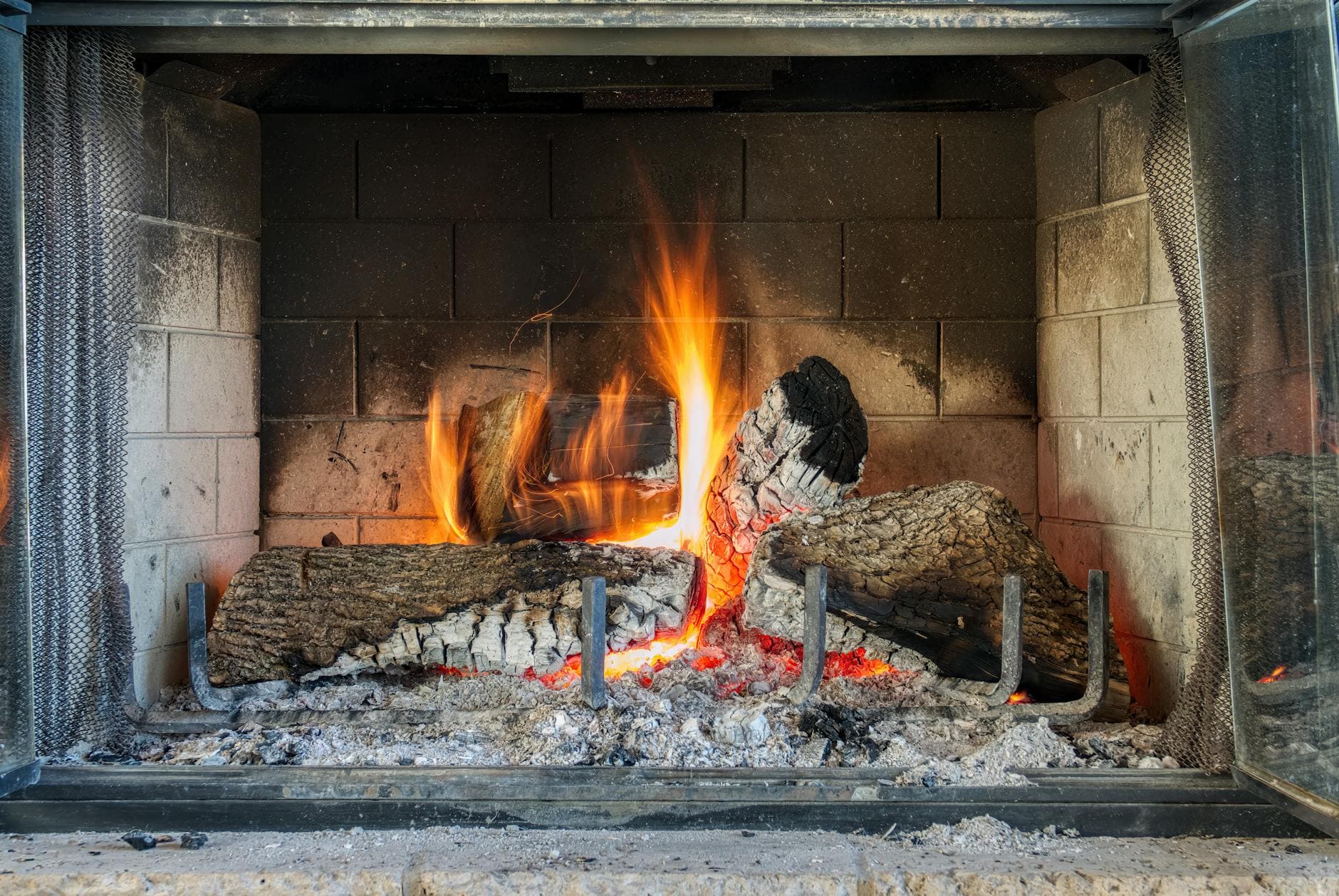
Ash removal from the firebox is typically part of the visit. Ash left sitting in the firebox absorbs moisture and forms a paste that corrodes metal components and eats into firebrick.
How Often to Clean a Wood-Burning Fireplace
Once per year is the baseline. If you burn frequently (three or more fires per week during winter), twice a year is better. The trigger is not time, it is creosote depth: the Chimney Safety Institute of America recommends sweeping when buildup reaches 1/8 inch.
Factors that accelerate creosote buildup:
- Burning unseasoned (wet) wood
- Low, smoldering fires
- An oversized or exterior flue that runs cool
- Restricted airflow from a partially closed damper
How Often to Clean a Gas Fireplace
Gas fireplaces do not produce creosote, but they still need annual attention. Dust accumulates on the logs and inside the burner assembly. The pilot assembly, thermocouple, and gas valve should be inspected each year. Glass panels need cleaning. The flue or vent cap should be checked for blockages.
Skipping gas fireplace maintenance is a carbon monoxide risk. A blocked vent or a failing thermocouple can allow combustion gases to spill into the room.
What You Receive After the Appointment
Eco Grizzly provides a written summary of every cleaning visit. It documents what was removed, what was inspected, and any findings that need attention. This record is useful for insurance purposes and for tracking your chimney's condition over time.
Call (424) 258-9882 to schedule fireplace cleaning in Pasadena or anywhere in Los Angeles County.